
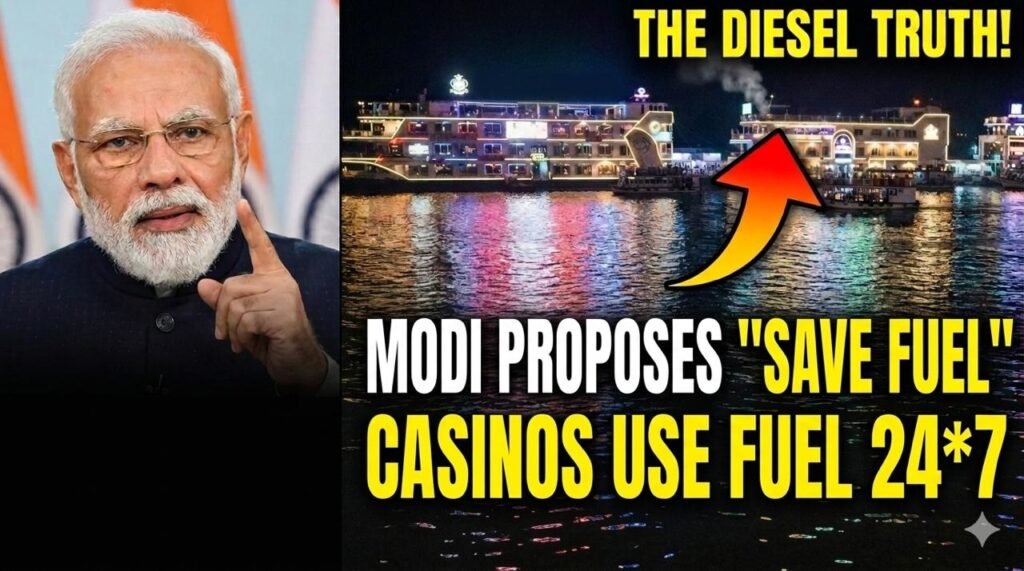

Round the Clock use of Fuel in Casinos Raise Questions Over Fuel Consumption, Sustainability & Environment!
Vishal Rajemahadik
Goa:
Led by Prime Minister Narendra Modi, as India continues to promote fuel conservation and energy efficiency, a debate is emerging in Goa over the fuel footprint of the state’s offshore casino industry and whether alternative operating models could reduce dependence on diesel, lest we forget the discussion on “shifting of casinos”.
Prime Minister Narendra Modi has repeatedly called for reducing unnecessary fuel consumption, improving energy efficiency and encouraging greater use of public transport as part of broader national efforts aimed at energy security and sustainability.
Against this backdrop, questions are being raised about the operation of Goa’s floating casinos anchored in the Mandovi River and the energy required to sustain them.
How the Offshore Casino System Operates
Goa currently operates around half a dozen offshore casinos located in the Mandovi River, North Goa. Visitors are transported from shore-based jetties to casino vessels through smaller support vessels commonly referred to as “feeder boats”. Apart from transporting passengers, these boats are also used to ferry staff, food supplies, beverages and other operational materials required to keep casino operations running.
Industry observers note that the offshore casino business functions around the clock, requiring continuous logistical support and uninterrupted electricity supply.
The casino vessels themselves contain gaming floors, restaurants, entertainment areas, kitchens, lighting systems, air-conditioning units, surveillance infrastructure, computer systems and other facilities similar to those found in hotels and entertainment complexes on the ground. Because these vessels operate away from shore, onboard power generation systems are essential for normal operations.
The Diesel Question
Marine vessels operating offshore typically rely on diesel-powered generators to produce electricity while away from shore-based power connections. Electricity is required for a wide range of services including lighting, air-conditioning, kitchen operations, elevators, surveillance systems, gaming equipment, water treatment facilities and crew accommodation. However, the exact diesel consumption figures of Goa’s floating casinos are not publicly disclosed.
Marine industry experts say fuel consumption can vary significantly depending on vessel size, passenger volumes, generator capacity, occupancy rates and operating schedules.
While large hospitality vessels can consume substantial quantities of fuel to maintain round-the-clock operations, there are currently no publicly available audited figures detailing the annual diesel usage of Goa’s offshore casinos.
As a result, estimates regarding total fuel consumption remain estimates rather than verified figures, which runs into crores of rupees monthly.
Could Alternatives Exist?
Globally, many ports and cruise terminals use shore power systems that allow vessels to connect directly to the electricity grid while docked or berthed, reducing the need for onboard diesel generators.
Such systems are widely used in international commercial ports and have become an important tool for reducing emissions and improving energy efficiency. This has prompted questions about whether similar infrastructure could eventually be explored in Goa? If it’s feasible, can the casinos also be lined up close to the shore-line?
Experts say the feasibility of such systems would depend on technical requirements, investment costs, regulatory approvals and operational considerations.
The Relocation Debate
The possibility of relocating floating casinos away from the river has been discussed in Goa for several years. Former Chief Minister Manohar Parrikar had publicly spoken about relocating casinos from the Mandovi River. However, offshore casino operations continue in the river today. Questions remain regarding the legal, financial and logistical challenges that may have prevented relocation proposals from moving forward.
Environmental Concerns Continue
Environmental concerns relating to floating infrastructure and river ecosystems have been raised in multiple jurisdictions around the world. In Goa, environmental organisations and local groups have periodically expressed concerns regarding the long-term ecological health of the Mandovi River and the cumulative impact of increasing river activity.
Recently, the Goa State Pollution Control Board announced an audit process following concerns raised during court proceedings regarding environmental compliance and monitoring.
A Debate Beyond Tourism
The discussion surrounding offshore casinos is no longer limited to tourism and gaming alone. It increasingly intersects with questions surrounding energy efficiency, fuel consumption, environmental sustainability, river ecology, urban planning, tourism policy and economic development.
Supporters argue that casinos generate employment and contribute to Goa’s tourism economy, while critics continue to call for greater transparency regarding environmental and operational impacts.
For policymakers, industry stakeholders and citizens alike, one issue remains clear: decisions regarding the future of Goa’s floating casinos will require data, transparency and evidence-based public discussion.
Until then, many of the questions surrounding fuel consumption, environmental impact and long-term sustainability remain open for investigation.



Best Article..,
Best Article… Authorities should think over it….